


Library Introduction
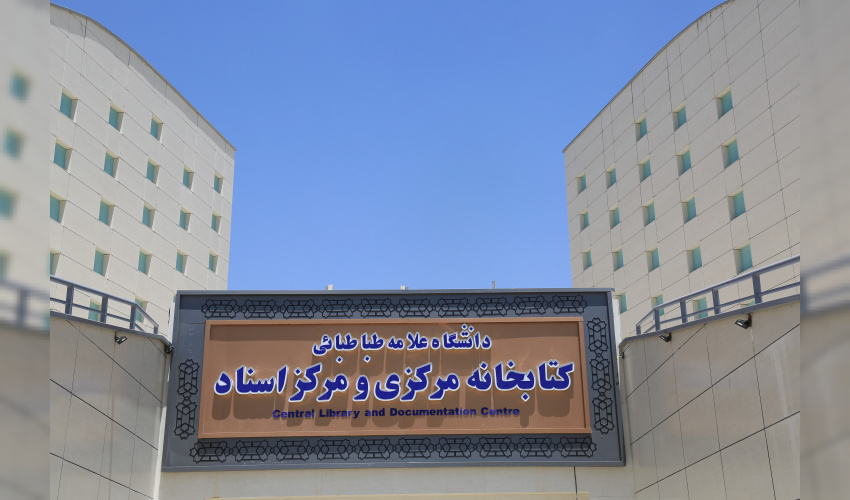
The Central Library and Documentation Center of Allameh Tabatabaei University was established in 1985 with a basic collection of Persian and non-Persian resources in the fields of humanities and social sciences. The important departments of the library include: Document Deposit and Delivery Services Department, Knowledge Organization and Processing Department, Periodicals Department, Theses and Research Projects Department, Documents and Records Department, Reference Services Department (Physical and Electronic), and Digital Library Department. Since 2013, with the grace of God Almighty, the support of the respected university administration, and the unwavering cooperation of its librarians, this library has tried to play an effective role in meeting the information needs of humanities researchers by bringing itself closer to the standards of Iranian university libraries in terms of space, human resources, redefining and improving processes, equipment, and creating new departments such as the "Electronic Reference Services Department", the "Children and Adolescent Services Department", "Donated Collections" and "Virtual Reference Desk Services". The design and creation of the first standard digital library of the Ministry of Science, Research and Technology is the turning point of this prominent presence. The Allameh Tabatabaei University Digital Library, supporting a wide range of standards in the field of information and knowledge management, has provided a suitable and unique platform for conducting research and study in the field of humanities in all its processes and functions.
The Central Library has not limited itself to its own collection to meet the information needs of the university's educated community and has officially made access to reputable domestic databases (such as "Megiran", "Civilika", "Ganjineh", "Noor Database" and "Iran Index") and international databases (such as Ebsco, Scopus, Emerald, Ebrary, Palgrave, Proquest, ScienceDirect and SAGE) possible. In addition to these two approaches and with the aim of sharing resources with other information centers, concluding a memorandum of understanding with other reputable domestic and international libraries and research centers and becoming a member of the National Content Consortium has been considered.
In addition to the central library and the documentation center, this university has nine faculty libraries as follows:
Library of the Faculty of Foreign Languages and Literatures
Library of the Faculty of Communications
Library of the Faculty of Economics
Library of the Faculty of Physical Education
Library of the Faculty of Campus No. 2
Library of the Faculty of Law and Political Science
Library of the Faculty of Psychology and Educational Sciences
Library of the Faculty of Social Sciences
Library of the Faculty of Management and Accounting
Library of the Eco Insurance Institute of Higher Education
Based on the organization approved in 1989, all libraries operate in a decentralized manner, and the central library is Its educational and research mission has a semi-centralized cooperation and relationship with faculty libraries and tries to assist them in determining policies and coordinating activities.